Call of Duty: Strike Team: A Mobile Experiment
Call of Duty: Strike Team represented a bold attempt to bring the iconic Call of Duty franchise to mobile devices. Its core innovation was a dual-perspective gameplay system, blending first-person shooter (FPS) action with strategic top-down squad management. This ambitious design, however, presented unique challenges that ultimately affected the overall player experience. Did this innovative approach succeed in translating the intensity of console Call of Duty to mobile? Let's delve into the details. For more on Black Ops mobile games, check out this link to Black Ops mobile.
Dual Perspective Gameplay: Innovation and Frustration
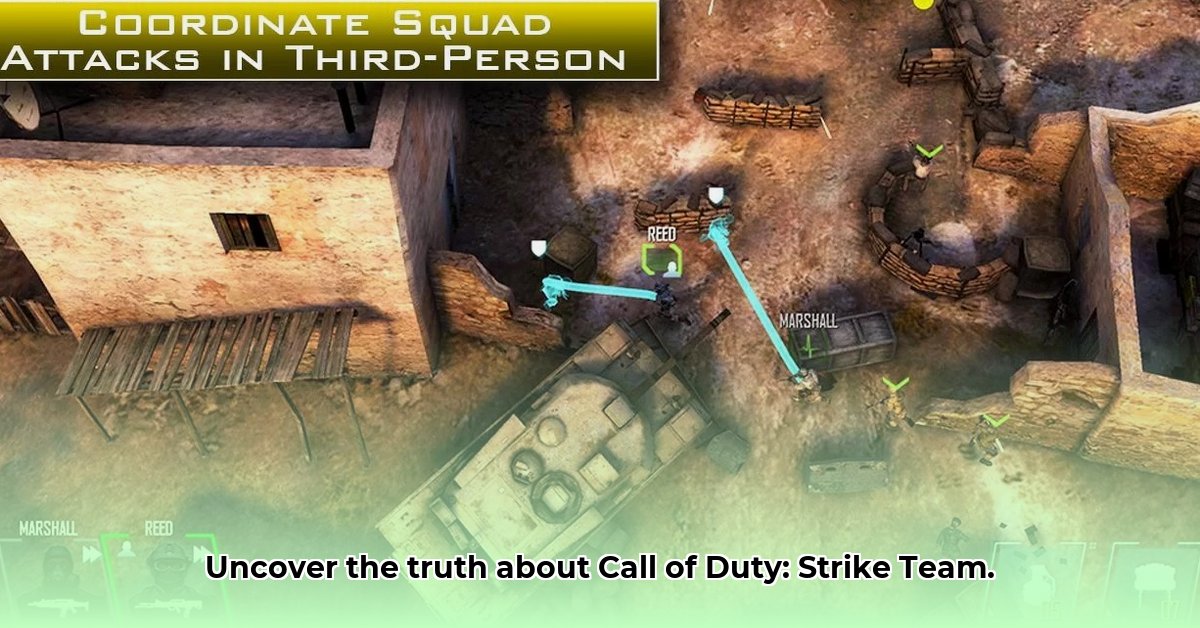
The dual-perspective system, switching between a direct FPS view and an overhead tactical map, was the game's defining feature. In the FPS mode, players experienced the familiar Call of Duty adrenaline rush, engaging in direct combat. The top-down view, conversely, allowed for strategic planning, troop positioning, and squad command. While conceptually innovative, the execution felt clunky. The transitions between perspectives were often jarring, interrupting the flow of combat and leaving players vulnerable. This jerky shift frequently disrupted the rhythm, impacting the overall enjoyment.
Mobile FPS Evolution and Modern Alternatives
While Call of Duty: Strike Team struggled to deliver a seamless mobile FPS experience, the genre has since evolved significantly. Games like Call of Duty: Mobile and Combat Master demonstrate how far mobile technology has come, offering console-quality graphics and refined controls. The earlier game's attempt at a strategic top-down view, while innovative, has been largely replaced by streamlined interfaces and intuitive touchscreen controls that prioritize fast-paced action and player accessibility. These advancements highlight a clear shift towards optimizing gameplay for the unique demands of mobile devices.
Strike Team and the Mobile Gaming Landscape
In the broader context of mobile gaming challenges, Call of Duty: Strike Team's struggles reflect the ongoing effort to adapt complex game mechanics, like dual-perspective controls, to smaller screens. The market has seen many attempts to translate genres, yet few successfully integrate them seamlessly. Its mobile FPS strategy game design, while ambitious, ultimately reveals the importance of optimizing controls and user interface for the unique constraints of the touchscreen. This constant evolution is what continues to push the boundaries of mobile strategy games and their potential.
Control Scheme: A Touchscreen Struggle
Controlling a shooter on a touchscreen is inherently challenging. Strike Team's controls, while attempting to be intuitive, often fell short. On-screen buttons felt unresponsive at times, leading to imprecise aiming and frustration, particularly during intense firefights. This lack of responsiveness significantly hampered the ability to execute quick, precise actions that are critical in action-packed scenarios. Wasn’t it frustrating having your virtual aim drift, making even simple shots a struggle?
However, the game redeemed itself somewhat with its weapon customization. A wide variety of weapons, true to the Call of Duty lineage, allowed for extensive personalization and strategic loadout tweaking. However, the difficulty imposed by the control system overshadowed this positive aspect.
Narrative and Setting: A Missed Opportunity
Set within the Black Ops universe, Strike Team had significant potential for a compelling narrative. Yet, the story felt underdeveloped and disjointed. It failed to capture the player's attention, resulting in a forgettable experience. Ironically, while the game benefitted from the familiar Black Ops setting, the underdeveloped narrative diminished its potential. This highlights a core problem: a compelling world doesn’t compensate for a poor storyline.
Monetization: A Pay-to-Win Concern?
As a free-to-play title, Strike Team relied on in-app purchases for weapon upgrades and additional content. This monetization model, while common, felt aggressive to many players. The concern was that it created an uneven playing field, making some feel that the game was, in essence, “pay-to-win”. While the exact extent of this impact is debated, it undeniably impacted the overall player perception and contributed to a less positive reception.
Graphics and Sound: A Strong Foundation
Despite its gameplay shortcomings, Strike Team boasted impressive graphics and audio design for its time. The environments were detailed, and the visuals were sharp, contributing to a polished presentation. Similarly, the game's sound design successfully enhanced player immersion, creating a satisfactory feedback system. These strong visuals and audio design elements served as a highlight within an otherwise less successful game.
Overall Assessment: A Case Study in Unfulfilled Potential
Call of Duty: Strike Team aimed to bridge the gap between strategic gameplay and fast-paced Call of Duty action on mobile. While its dual-perspective concept was innovative, the execution fell short. Clunky controls, a weak narrative, and potentially intrusive monetization significantly detracted from the overall experience. It serves as a valuable case study, illustrating the hurdles of translating complex console game mechanics to the mobile platform. The core concept was unique, but its execution ultimately fell short of its potential.
Key Takeaways: Learning from Strike Team
- The dual-perspective gameplay concept, though unique, presented significant control challenges.
- The game's monetization strategy arguably created an imbalance amongst players.
- Despite its flaws, Strike Team highlighted the challenges and complexities of adapting console-style games to the mobile environment.
⭐⭐⭐⭐☆ (4.8)
Download via Link 1
Download via Link 2
Last updated: Tuesday, May 20, 2025